


The Bitcoin Newsletter 43
Welcome to the 43rd Edition of The Bitcoin Newsletter
In late September, I had a great time in the U.S. celebrating the release of my book, Digital Real Estate. What started as a book release party at PubKey in New York City turned into something even more exciting.
Shortly before leaving, I was invited to join the Bitcoin Treasuries Conference in NYC to discuss bitcoin and real estate alongside Grant Cardone, who is making a significant move into bitcoin.
We had a great conversation. Seeing established real estate investors like Grant putting the Digital Real Estate thesis into practice is exciting. I believe these developments could have far-reaching implications as more investors and developers begin to explore similar strategies.
I just returned from the Plan ₿ Conference in Lugano (October 22–23). It was a great conference and another reminder of how much the Bitcoin industry has evolved. The vibe is becoming increasingly corporate, and the atmosphere is certainly different from Bitcoin’s early days. That is to be expected as bitcoin attracts more capital and institutional interest.
I had the opportunity to give a keynote, participate in an interview, and host a book signing for Digital Real Estate. It was great to connect with readers and familiar faces from across the industry.
On November 5th and 6th, I’ll be attending Bitcoin Amsterdam, sharing insights from Digital Real Estate on the intersection of real estate and bitcoin. If you’re around, feel free to come say hello!
As part of the promotional tour for Digital Real Estate, I’ve also recorded a wide range of podcast interviews and conversations, which I’ve listed below in the WORTH KNOWING section.
In this edition, I conclude my five-part series on inflation, deflation, and monetary systems.
Over the past four editions, I explored how inflation creates the illusion of wealth, why it has become a structural feature of our monetary system, how deflation can reflect genuine economic progress, and why Bitcoin offers an alternative.
In Part V, I examine how inflation changes human behavior, shapes investment decisions, and influences the way we value assets such as real estate. I also explore the opportunities emerging as two fundamentally different monetary systems increasingly coexist.
In the next edition, I will take these ideas further and examine what they could mean for real estate companies, corporate treasuries, and capital markets.
I hope you enjoy this edition.
Best regards, Leon
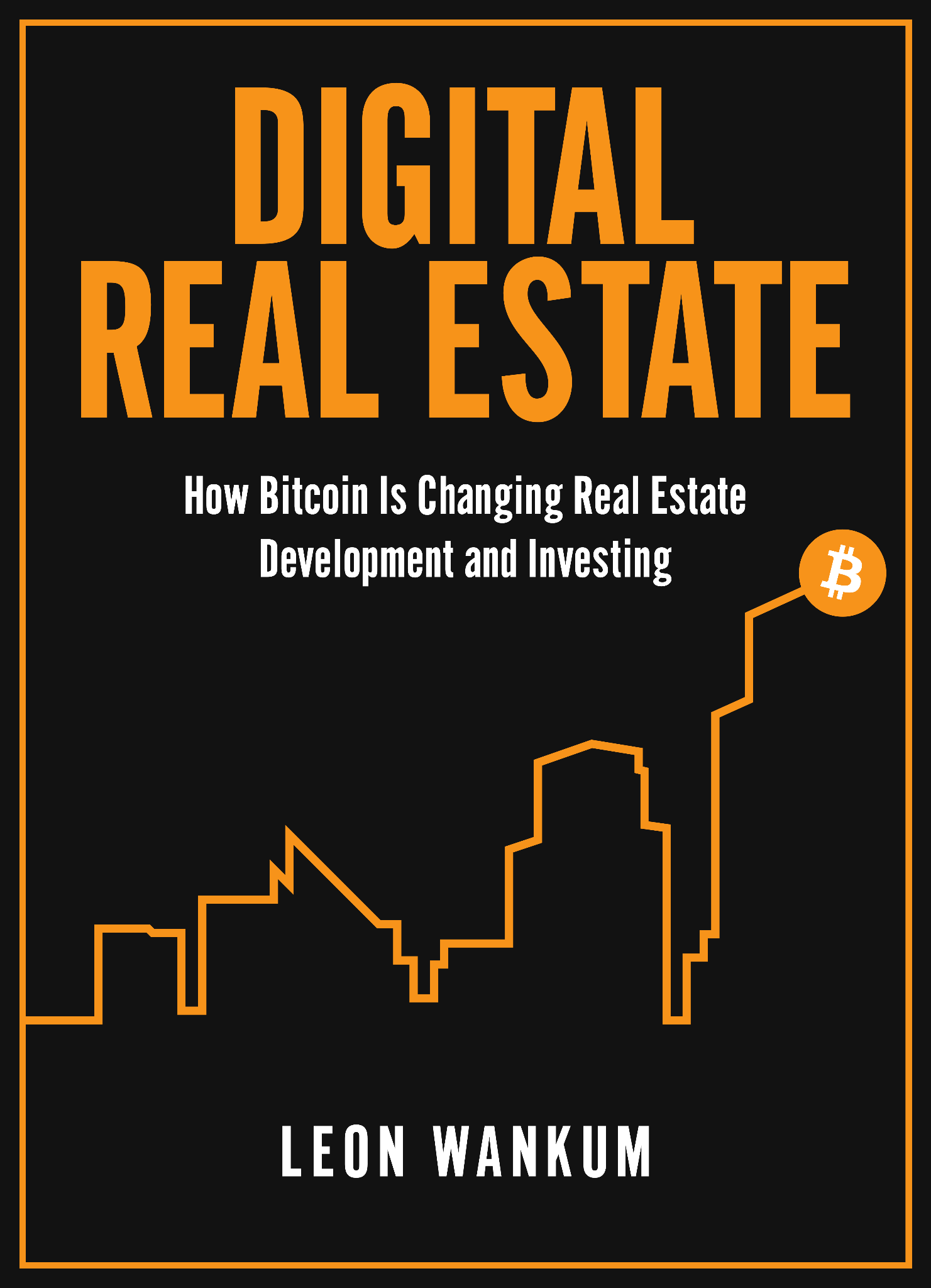
Digital Real Estate — My book Digital Real Estate is available in both English and German.
Thank you to everyone who has already ordered a copy. ORDER: ENG | GER
DEEP DIVE
Inflation and the Distortion of Human Action
Inflation does more than raise prices. It changes human behavior and incentives, shaping how people save, invest, take risks, and plan for the future. Over time, it shapes entire economies, influencing where capital flows, which assets become valuable, and who benefits from economic growth.
To understand why Bitcoin matters, we must first understand how inflation changes human behavior.
What Is Inflation?
Historically, inflation referred to an expansion of the money supply. Today, inflation is commonly described as an increase in consumer prices. But this focuses on the symptom rather than one of its underlying causes: the expansion of money relative to the goods and services it can purchase.
Consider a simple economy with ten dollars and ten eggs. Each egg costs one dollar. If production increases to one hundred eggs while the money supply remains unchanged, each egg could cost just ten cents. People become wealthier because their money buys more.
Now imagine the opposite. The economy still produces ten eggs, but the money supply increases to one hundred dollars. If all else remains equal, the price of each egg could rise to ten dollars.
More money has been created, but no additional wealth. Real economies are more complex, and prices respond to many factors. Yet the underlying principle remains: Creating more money does not automatically create more wealth.
Genuine prosperity comes from producing more with less, through innovation, productivity, and saving. Monetary expansion, by contrast, can redistribute existing wealth by changing prices and purchasing power without increasing real economic output.
How Inflation Changes Human Behavior
Money is more than a medium of exchange. It allows us to preserve the value of our work and carry it into the future. But what happens when money steadily loses purchasing power?
People change their behavior. Saving becomes less attractive. Borrowing and investing become more appealing. People increasingly seek assets that can preserve their wealth. Stocks, gold, art, land, and especially real estate become more than investments. They become substitutes for money.
This helps explain one of the most important developments in modern real estate: Property is no longer valued only for the income or utility it provides, but for its ability to preserve wealth.
As more capital competes for these assets, prices rise faster than the underlying income or utility they provide. This benefits existing owners while making it increasingly difficult for new buyers to enter the market. Inflation therefore does not simply change prices. It changes incentives, behavior, investment decisions, the distribution of wealth, and ultimately the structure of the economy.
Over time, these incentives become so deeply embedded in economic behavior that people begin to treat investing as a necessity rather than a choice. Even those who have adopted bitcoin may continue to diversify into assets whose monetary role bitcoin was designed to replace.
Who Benefits From Inflation?
When new money enters the economy, it reaches certain participants first. They can spend or invest that money before its effects have fully spread through the economy.
Others receive it later, often after prices have already adjusted. The result is a redistribution of purchasing power. Those with access to newly created money and appreciating assets can benefit. Those who depend primarily on wages and cash savings fall behind.
Two Different Monetary Systems
The Austrian School of Economics offers a useful framework for understanding these effects. Its starting point is simple: People act with purpose and respond to incentives.
Change the incentives, and you change behavior. The fiat monetary system allows money to be created through central bank operations and commercial bank lending.
This gives governments and financial institutions considerable flexibility. But it also creates incentives to borrow, expand credit, and seek returns in assets rather than hold money that loses purchasing power over time.
Bitcoin is different. Its supply is limited to 21 million bitcoin. New bitcoin enters circulation according to a predictable issuance schedule, enforced by independently validating nodes following Bitcoin’s consensus rules. Miners compete by committing energy and resources, but cannot independently increase the supply beyond the protocol’s rules.
This introduces a fundamentally different monetary foundation: one in which scarcity is built into the system rather than determined by monetary policy. And that difference has consequences for how people think and act.
Real Estate’s Monetary Premium
Many people buy property primarily because they do not want to hold depreciating money, rather than because they need somewhere to live or want to earn income.
This creates what I describe in Digital Real Estate as a monetary premium: the portion of a property’s value that reflects its role as a store of wealth. It helps explain why property prices can rise far beyond what changes in rents or household incomes alone would justify.
Those holding substantial wealth in fiat-denominated assets may fail to recognize this shift. While nominal asset prices continue to rise, those same assets may be declining in bitcoin terms. This creates a process of market selection in which individuals and companies that recognize the changing monetary landscape can strengthen their financial positions, while others risk falling behind.
Bitcoin challenges this dynamic. Its supply is mathematically limited, and bitcoin can be transferred globally, divided into smaller units, and held without the maintenance or management requirements of a building.
This raises an important question: If people can preserve their wealth in bitcoin, how much of the monetary premium currently embedded in real estate will remain? This shift will change not only individuals’ incentives to save in property, but also how developers and investors operate.
For simplicity, I will refer to the latter as real estate companies. In this newsletter and the next, I will use the real estate industry as an example of how debt-intensive industries can integrate bitcoin as we move toward a bitcoin standard.
Given its economic significance and similarities to other capital-intensive sectors, real estate offers a useful case study of how this transition could fundamentally reverse the incentives created by inflationary money, replacing them with those of a disinflationary monetary system.
From Physical to Digital Real Estate
Real estate companies own physical assets, generate rental income, and usually use long-term debt to finance their operations. In an inflationary environment, this model can be effective. Fixed-rate debt may lose real value over time, while rents and property values can increase.
Instead of relying exclusively on physical assets to preserve capital, real estate companies can hold bitcoin alongside their properties. They could combine recurring rental income, access to financing, and the potential long-term appreciation of a scarce digital asset.
This would not eliminate the risks of either asset. Bitcoin remains volatile, leverage increases financial vulnerability, and real estate requires active management and ongoing investment.
But it could fundamentally change how companies structure their balance sheets and allocate capital.
We are already seeing the early stages of this transition. Companies such as Strategy and Strive have made bitcoin central to their treasury strategies, while Tesla and SpaceX also hold bitcoin on their balance sheets.
Real estate businesses are particularly well positioned to develop their own approaches to integrating bitcoin into their balance sheets because of their existing assets, recurring cash flows, and experience with capital structures.
The integration of bitcoin itself changes economic incentives and can be understood as part of the broader process of hyperbitcoinization.
Inflation changed human behavior. Bitcoin offers the possibility of changing it again.
Humanity moves through different economic and monetary phases, each shaped by the incentives of its time. The fiat monetary experiment has exposed fundamental weaknesses, and its consequences may become considerably more severe before a meaningful transition takes place. But economic systems evolve, and periods of monetary instability can also create the conditions for something better to emerge.
Two things can be true at once: the fiat system can continue to undermine its own foundations through monetary expansion, while bitcoin monetizes within that very system, absorbing capital and gradually capturing the monetary premium currently embedded in other assets. In this sense, the inflationary nature of fiat money is itself one of the forces driving Bitcoin adoption.
As this process unfolds, economic incentives begin to change. Individuals reconsider how they save, companies rethink how they allocate capital, and entire industries adapt their balance sheets and business models. What begins as a monetary transition could ultimately reshape the broader economic structure.
In the next edition, I will explore why the next generation of Bitcoin treasury companies could emerge from the real estate industry itself. The term has become somewhat diluted as companies have adopted Bitcoin treasury strategies simply because they are fashionable. Yet any profit-oriented business has reason to consider bitcoin as money, including as a treasury asset.
What interests me more is how established business models can integrate bitcoin into their operations and capital structures. The real estate industry provides a particularly compelling example of how combining physical and digital assets could reshape corporate balance sheets and capital markets.
WORTH KNOWING
Podcast and publications
Digital Real Estate — Order — A quick reminder that Digital Real Estate is available for order in English and for pre-order in German. Thank you to everyone who has already ordered a copy.
After a long absence from podcasts and interviews, I’m happy to be back! I’ve had some great conversations over the past few weeks, with more recordings coming online soon and several exciting appearances already planned.
Digital Real Estate — Live Book Release from PubKey — I celebrated the release of Digital Real Estate at PubKey in New York, discussing the book, the ideas behind it, and the evolving relationship between bitcoin and real estate. WATCH
Bitcoin Treasuries Conference — I joined Grant Cardone on stage in New York to discuss the Digital Real Estate thesis and how bitcoin could transform the real estate industry. It was great to exchange ideas with someone putting these strategies into practice on such a large scale. WATCH
Bitcoin Taking on Real Estate’s $300 Trillion Monetary Premium — Bitcoin Magazine TV — I joined Bitcoin Magazine TV in Nashville to discuss how bitcoin could challenge the monetary premium embedded in real estate and reshape how property is valued and used as a store of wealth. WATCH
The Most Hated Rally in Real Estate Is Coming — Grant Cardone & Leon Wankum — I joined Grant Cardone and Rob to discuss the changing real estate market, distressed property opportunities, and how combining cash-flowing real estate with bitcoin could transform investment strategies and corporate balance sheets. WATCH
The Insane Math Behind Bitcoin Demonetizing Real Estate — Bitcoin Magazine Podcast — I joined Spencer Nichols to discuss why real estate has become the world’s largest store of wealth, how bitcoin could capture its monetary premium, and what this means for property valuations, homeownership, and the future of real estate. WATCH
$22K of BTC Will Buy a $571K Home by 2034 — Robin Seyr — Robin and I discussed why real estate continues to lose value when measured in bitcoin, how the purchasing power of bitcoin could change the economics of homeownership, and why real estate companies could become the next generation of Bitcoin treasury companies. WATCH
How Bitcoin Is Transforming Real Estate Development — Tim Kotzman — I joined Tim in New York to discuss how bitcoin is changing real estate development, from treasury strategies and capital allocation to the relationship between physical property and digital scarcity. WATCH
Digital Real Estate with Ben Schmidt — Ben and I discuss the core thesis of Digital Real Estate, including why bitcoin can function as property, capital, and collateral alongside real estate. This is the first episode of a planned 12-part series exploring the book in greater depth. WATCH
Bitcoin, Organisms, Architecture, and Time Preference — Nolan and I explored Part V of Digital Real Estate, which I rarely get to discuss in interviews. We went into bitcoin, organisms, architecture, and time preference, and how these ideas connect to the broader thesis of the book. WATCH
Digital Real Estate on The Bull Standard — I joined The Bull Standard for a deep conversation about how the Digital Real Estate thesis plays out differently for individuals and corporations. We explored what bitcoin means for corporate real estate strategies, particularly for publicly listed companies navigating this transition.WATCH
🇩🇪 Government Bonds Are Shaking: Bitcoin Is Breaking the Interest Rate System — Niko Jilch and I discuss digital credit, preferred stocks, and the transformation of institutional balance sheets, how bitcoin’s purchasing-power appreciation could challenge government bonds as an interest-rate benchmark, and the evolution of Bitcoin infrastructure from running your own node to data centers in space. WATCH | WATCH THE FULL MASTER SERIES
🇩🇪 “Bitcoin wird auf 100 Millionen steigen” — Interview with Marc Steiner — In this in-depth conversation with Marc Steiner, we discuss bitcoin, its long-term potential, and the broader second-order effects its adoption could have on the economy and society. WATCH
IDEAS OF INTEREST
When Treasuries Compete With Real Estate — When Treasury yields exceed real estate cap rates, the investment case for property weakens. Higher risk-free yields and negative leverage can reduce demand, freeze transactions, and force real estate prices to adjust. READ
🇩🇪 The Fabian Society – Part 21 — A historical examination of the Fabian Society and its connections with British Labour, German Social Democrats in exile, and political figures in the United States during the late 1930s and early 1940s. The piece traces networks around figures including Keynes, Roosevelt, Laski, and German SPD exiles, and argues that Fabian ideas influenced postwar social-democratic institutions and policy. READ
AI, Ownership, and Bitcoin — An analysis of Michael Saylor’s argument that AI could shift economic power from labor toward ownership as intelligence and machine labor become increasingly abundant. In this view, Bitcoin’s absolute scarcity, direct ownership, and portability could make it an increasingly important form of digital property in an AI-driven economy. READ
The Housing Market Is Becoming a System of Exclusion — Homeowners who locked in low mortgage rates have little incentive to sell, while new buyers face dramatically higher monthly costs. The result is a frozen market in which affordability remains poor, younger households rent longer, and homeownership increasingly depends on when you entered the market. The argument: the next housing crisis may be defined less by collapsing prices than by exclusion from ownership. READ
If you wish to support my work on The Bitcoin Newsletter, feel free to contribute. You have the option to send some satoshis/bitcoin. Your support is greatly appreciated!
Lightning: law@getalby.com
On-chain: bc1qyc9q89wjzmvaw729tj3wsrsfhft53mjycrjxdk
Nostr PubKey
npub1v5k43t905yz6lpr4crlgq2d99e7ahsehk27eex9mz7s3rhzvmesqum8rd9
Resources
Ludwig von Mises — Human Action: A Treatise on Economics, Chapter I: Acting Man (1949) — READ
Leon Wankum — Inflation and the Illusion of Wealth, Part I — READ
Leon Wankum — Inflation and the Illusion of Wealth, Part II — READ
Leon Wankum — Deflation: The Monetary Expression of Genuine Economic Growth — READ
Leon Wankum — Bitcoin as the Resolution — READ
Tesla — Quarterly Report (Form 10-Q), June 30, 2026 — READ
MarketWatch — SpaceX Reveals Bitcoin Holdings of Over $1.4 Billion (2026) — READ
Photo Credit: Rockefeller Center under construction, New York City, 1932. Source: NYC URBANISM.
Disclaimer: the content is for informational purposes only, you should not construe any such information or other material as legal, tax, investment, financial, or other advice. Make sure you do your own research before making any investment and be aware of your own risk tolerance.
If you like to build on my thoughts, feel free, but please cite me as the source. 2026 – Leon Wankum.
Editing and content creation by Clemens Haidinger.
0A79 E94F A590 C7C3 3769 3689 ACC0 14EF 663C C80B


