


The Bitcoin Newsletter 41
Welcome to the 41st Edition of The Bitcoin Newsletter
Over the past two editions, we explored Inflation and the Illusion of Wealth.
Part I examined how monetary inflation creates the appearance of prosperity, distorts price signals, and contributes to rising asset prices while the purchasing power of money deteriorates. Part II explored why this system persists, how control over money and credit concentrates economic and political power, and why inflation has become a structural feature of the modern monetary system.
This week, I turn to the other side of the equation: deflation.
Deflation is generally associated with economic contraction, falling demand, and financial crisis. But this interpretation overlooks an important distinction. Falling prices can result from monetary and credit contraction, but they can also emerge from something fundamentally positive: productivity, technological progress, and our ability to produce more with fewer resources.
In Part III Deflation: The Monetary Expression of Genuine Economic Growth, I explore this distinction, why debt-based fiat systems struggle to tolerate falling prices, and how productivity gains naturally exert downward pressure on prices.
This raises the question I will turn to in the next edition: Could bitcoin provide a monetary foundation that allows these deflationary forces to operate without destabilizing the financial system?
These are fundamental monetary questions because they shape how we understand prices, wealth, and ultimately the value of assets.
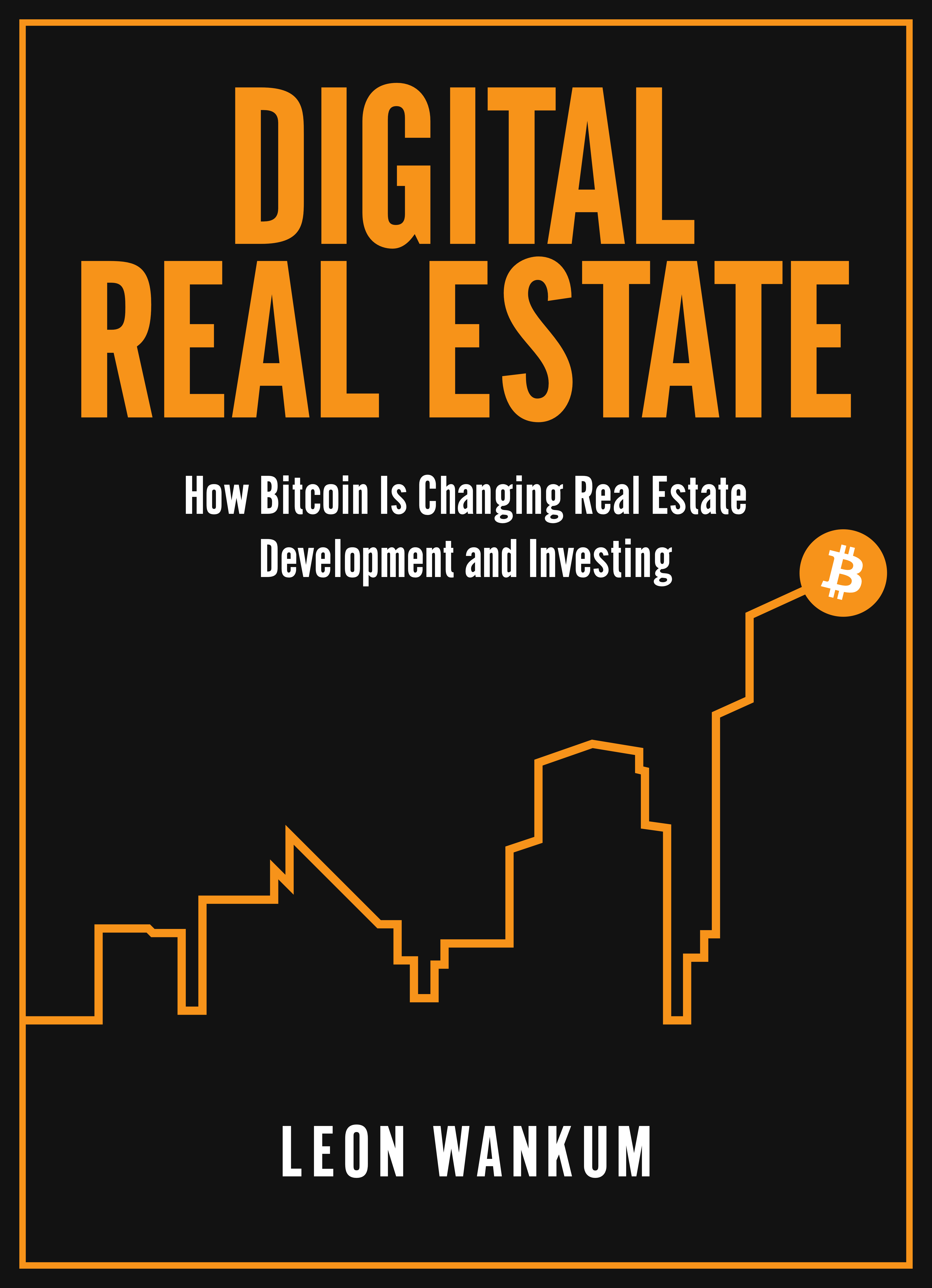
They are also central to my forthcoming book, Digital Real Estate, which examines how a changing monetary system could affect the role and valuation of real estate in a bitcoin-based economy.
After nearly three years of researching, writing, and refining these ideas, I’m very happy that Digital Real Estate is officially available for pre-order. Thank you to everyone who has already ordered a copy. You can pre-order the English edition here or the German edition here.
Over the coming weeks, I’ll also share more about some of the hidden gems inside the book and details about the release party.
Best regards,
Leon
DEEP DIVE
Deflation: The Monetary Expression of Genuine Economic Growth
Deflation, Productivity, and Real Prosperity: What Is Deflation?
Deflation is commonly portrayed as an economic threat, associated with recession, falling demand, and financial collapse. Yet this view conflates two fundamentally different phenomena: monetary deflation, which arises from credit contraction and debt liquidation, and productivity-driven deflation, which results from technological progress, efficiency, and competitive markets. Falling prices can represent progress rather than economic decline.
In a functioning economy, innovation reduces the cost of producing goods and services over time. As productivity increases, prices tend to fall, enabling individuals to acquire more with less. This is not economic contraction but real wealth creation: Purchasing power rises because society can produce more with fewer resources.
In such a system, saving is not penalized, long-term planning becomes rational, and capital allocation reflects genuine efficiency rather than financial engineering.
Technological history makes this visible. As Jeff Booth explains in The Price of Tomorrow, tools that were once expensive and scarce, like computers, become widely accessible as production scales and learning curves improve. What once required significant capital becomes embedded in everyday devices, often approaching marginal cost. This form of deflation is not a pathology—it is the price mechanism transmitting progress to consumers.
From a praxeological (or human-action-based) perspective, what matters is not whether prices rise or fall, but whether they convey accurate information. When money holds value over time, individuals can distinguish real productivity gains from monetary distortions. Deflation driven by innovation is therefore not a collapse of economic activity, but a manifestation of increasing abundance.
Why Fiat Cannot Tolerate Deflation
While productivity-driven deflation is compatible with a market economy, it is incompatible with a fiat system built on debt. Modern monetary systems depend on continuous credit expansion. New money is created primarily through lending, meaning that perceived economic stability requires ever-growing nominal incomes to service existing obligations.
In such a structure, falling prices are destabilizing. If the general price level declines while debts remain fixed in nominal terms, the real burden of debt increases. Defaults rise, balance sheets deteriorate, and credit contracts further. What would be a benign or even beneficial price adjustment under hard money becomes a systemic crisis under fiat.
This is why fiat systems structurally resist deflation. Instead of allowing productivity gains to lower prices, monetary expansion absorbs those gains into asset inflation, stagnant wages, or higher nominal output. The economy becomes dependent on rising prices, not as a sign of growth but as a condition for solvency. In the long run, this makes inflation not a policy choice but a necessity.
The incompatibility is therefore structural: A debt-based system requires inflation to survive, while a productivity-driven economy naturally tends toward lower prices. One cannot coexist sustainably with the other.
Deflation in a Hard-Money System
In a hard-money system, this tension disappears. When the monetary base is fixed or tightly constrained, as with gold historically or bitcoin today, productivity gains are no longer absorbed by monetary expansion. Instead, they are expressed through falling prices and rising purchasing power.
Bitcoin’s supply is not set by policy, but by protocol rules. New units require real resource expenditure through proof-of-work, and total issuance is capped to 21 million units. As a result, monetary expansion cannot be used to offset structural inefficiencies or to stabilize debt. Prices must adjust to real economic conditions. Under such a system, technological progress directly benefits consumers. This follows well-documented patterns in economic history.
Wright’s Law, first articulated in 1936, observed that for each cumulative doubling of production, costs tend to fall by a predictable factor—a “learning curve” driven by efficiency, specialization, and process refinement. Moore’s Law, proposed in 1965, described a similar dynamic in computing: The number of transistors on a chip doubles roughly every two years, driving exponential increases in performance while steadily reducing costs.
These patterns are not absolute laws. Rising production can introduce fatigue, inefficiency, or error. But they reveal a consistent tendency: Where production is scalable and innovation continuous, prices gravitate downward over time.
This deflationary pressure is visible even within inflationary fiat systems, most clearly in computing. Processing power, storage, and software capabilities rise exponentially while costs steadily fall. Its full effect, however, is suppressed by monetary expansion.
As production becomes increasingly machine-driven and software-mediated, this tendency intensifies. Machine learning systems, automated design, modular manufacturing, and algorithmic optimization all compress costs.
In such an environment, a monetary base like bitcoin that does not expand in tandem allows price signals to reflect genuine efficiency gains rather than monetary dilution.
Deflation in this context is not collapse, but the economic expression of abundance. This is especially consequential for housing, where technological progress should reduce costs over time—but under inflationary money, those gains are instead absorbed into higher nominal prices and asset values.
This leaves a fundamental question: What kind of monetary system can allow productivity-driven deflation to translate into rising purchasing power without turning falling prices into a financial crisis?
In Part IV, Bitcoin as the Resolution, I will explore whether bitcoin’s fixed supply, divisibility, and verifiable scarcity can provide such a monetary foundation—and what that could mean for savings, technological progress, asset values, and ultimately real estate.
WORTH KNOWING
Podcast and publications
Digital Real Estate — Pre-Order — My book Digital Real Estate is available for pre-order in both English and German. Thank you to everyone who has already pre-ordered a copy. PRE-ORDER: ENG | GER
🇩🇪Die beste Bitcoin-Woche aller Zeiten? | 21weekly mit Leon Wankum — In this conversation with 21 Bitcoin, we discuss bitcoin’s recent rally and the longer-term dynamics behind it, including the role of bear markets in strengthening the network, the Bitcoin Power Law and its limitations, and why a long-term perspective can be more useful than short-term price predictions. WATCH
As part of the promotion for my book, I’ll also be appearing on more podcasts and conferences again after taking a step back from them over the past year. I’m also planning book release events in the US and Europe for the English and German editions. More details soon!
IDEAS OF INTEREST
Lyn Alden: Fiscal Dominance, Bitcoin & Digital Credit — Lyn Alden explains why Treasury intervention is an early sign of financial repression, why persistent deficits remain supportive for hard assets, and why she sees bitcoin’s current weakness as cyclical rather than structural. She also discusses Strategy’s STRC, digital credit, and why she remains bullish on bitcoin over the next 2–3 years. WATCH
The First Asian Cycle with Simon Gerovich — Metaplanet CEO Simon Gerovich outlines why Asia could become the next major source of bitcoin demand. Trillions of dollars remain parked in cash, while much of the region’s capital still lacks direct access to bitcoin. As regulation opens up, new custody, lending, yield and listed products could unlock a significant pool of patient capital. WATCH
Can the Fed Just Talk Rates Down? — James Lavish argues that hawkish Fed rhetoric can move short-term rates and inflation expectations, but not solve the bigger problem at the long end: massive Treasury refinancing and persistent deficit issuance. A useful distinction between a rate problem and a supply problem — and why the latter remains supportive for scarce assets like gold and bitcoin. READ
BlackRock: Bitcoin’s Role Is Becoming Clearer — BlackRock’s Robert Mitchnick says institutional investors increasingly view bitcoin as a scarce, decentralized monetary asset with fundamentally different return drivers from equities and bonds. Its recent strength during weakness in traditional markets offers a glimpse of bitcoin behaving as an emerging store of value and portfolio diversifier. WATCH Clip | WATCH Interview
A Rosicrucian Alchemist: Visualization Is the Source of Your Entire Life — An interesting perspective on visualization, not merely as a technique or tool, but as a way of shaping how we perceive and approach reality. The video explores how Rosicrucian and alchemical traditions understood imagination and visualization long before these ideas entered modern self-development culture. Personally, I find visualization particularly helpful during bitcoin bear markets, imagining the next bull market and how I want to position myself for and make use of the opportunities it may bring. WATCH
US Money Supply Hits Another Record — US M2 rose by $102.8 billion in July to a record $23.22 trillion, marking the 27th consecutive monthly increase. Since the start of 2026, money supply has expanded by more than $860 billion — continuing a trend that remains central to the hard-asset thesis. READ
If you wish to support my work on The Bitcoin Newsletter, feel free to contribute. You have the option to send some satoshis/bitcoin. Your support is greatly appreciated!
Lightning: law@getalby.com
On-chain: bc1qyc9q89wjzmvaw729tj3wsrsfhft53mjycrjxdk
Nostr PubKey
npub1v5k43t905yz6lpr4crlgq2d99e7ahsehk27eex9mz7s3rhzvmesqum8rd9
Resources
Jeff Booth — The Price of Tomorrow: Why Deflation Is the Key to an Abundant Future(2020) READ
T. P. Wright — Factors Affecting the Cost of Airplanes (1936) READ
Gordon E. Moore — “Cramming More Components onto Integrated Circuits,” Electronics, Vol. 38, No. 8 (1965) — READ
Leon Wankum – Bitcoin and Real Estate READ
Leon Wankum – Real estate vs. Bitcoin: Dismantling The Cash-Flow Narrative READ
Photo Credit: Philipp Haas & Söhne department store, Stephansplatz, Vienna, late 19th century. Source: Andreas Lehne, Wiener Warenhäuser 1865–1914. Photographer unknown
Disclaimer: the content is for informational purposes only, you should not construe any such information or other material as legal, tax, investment, financial, or other advice. Make sure you do your own research before making any investment and be aware of your own risk tolerance.
If you like to build on my thoughts, feel free, but please cite me as the source. 2026 – Leon Wankum.
Editing and content creation by Clemens Haidinger.
0A79 E94F A590 C7C3 3769 3689 ACC0 14EF 663C C80B


